
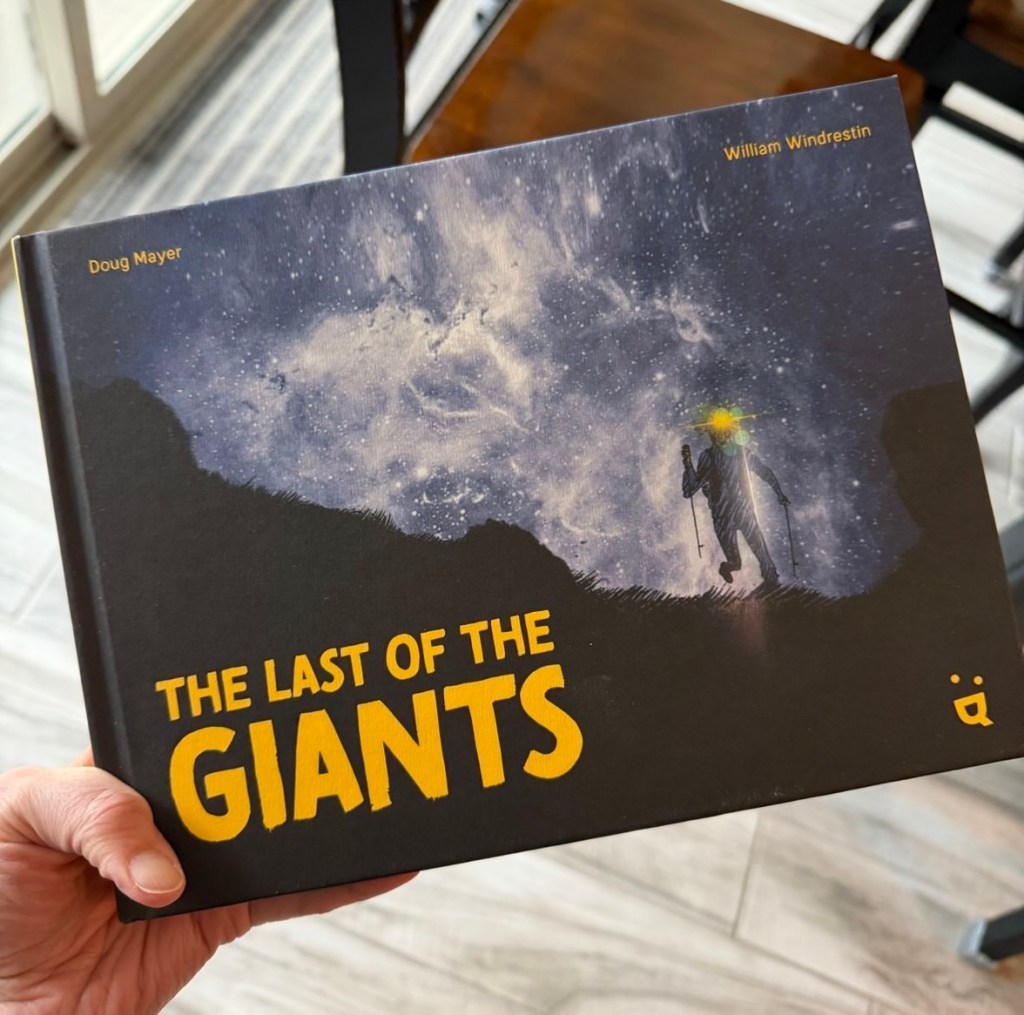
I was sent a copy of the book The Last of the Giants, a graphic novel by William Windrestin and Doug Mayer. The book intrigued me because it’s a fictional account of what many real ultrarunners go through in long distance endurance events. It also covers an event that I hadn’t heard about, the Tor des Géants in the Aosta Valley of Italy.
This race is about 205 miles and runners have 150 hours to complete it. It also has a high dropout rate, only about 60% of participants finish. There are 43 refreshment stops and 7 larger “life bases” about every 31 miles across the course, so participants can refresh supplies, get help, check-in, etc.
The illustrations throughout are not highly refined, yet you get a sense of character for each person in the story.
The main story follows a runner, Sam, in his journey throughout the race. We get to experience his highs and lows, his doubts and triumphs. It makes it very clear at the start this is fictional and resemblance to anyone real is coincidence. But I also think a resemblance is circumstance, having volunteered and paced at ultrarunning events the through line in this story is kind of universal when it comes to endurance.
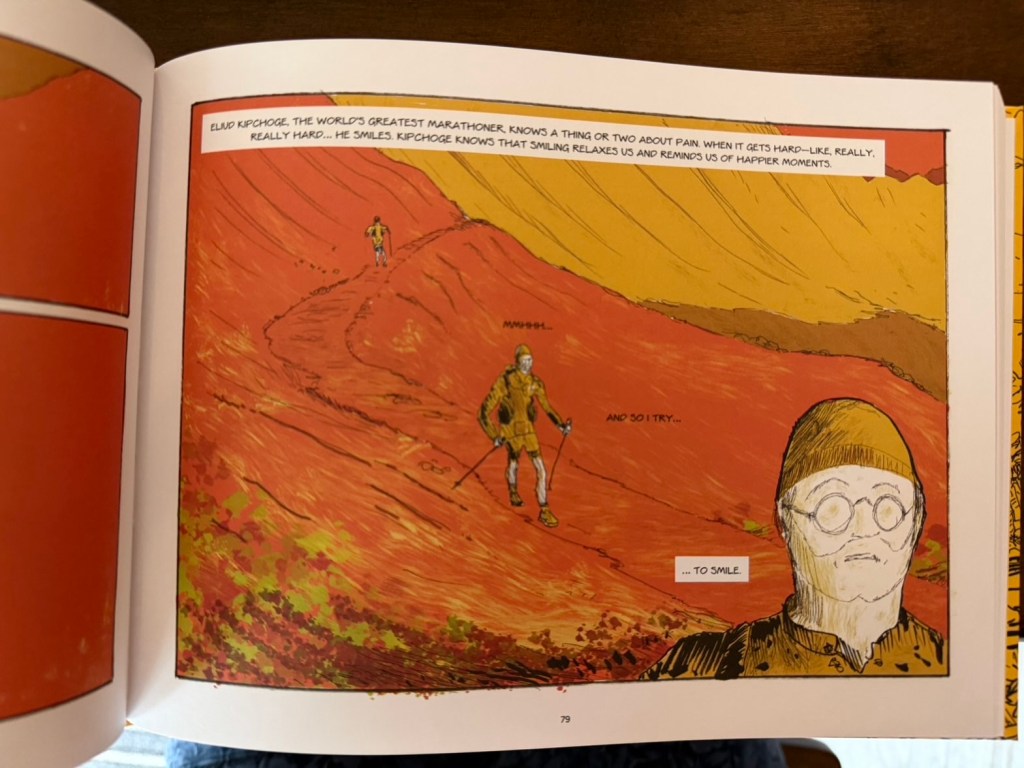
Sam has his struggles with physical pains and mental battles. He has opportunity to help others on the course. He has to battle through the course on his own at times, and in other moments he finds strength in partnering with other people running to cover the miles. I liked the moment where it talked about night running and seeing all of the other runners headlamps. It was likened to fireflies in the darkness that helped runners remember they weren’t out there alone.
I’m not a huge graphic novel reader, but I thought this was an innovative way to tell a story of an ultra endurance event. I’ve read a lot of traditional books about running and this was a new take for me.
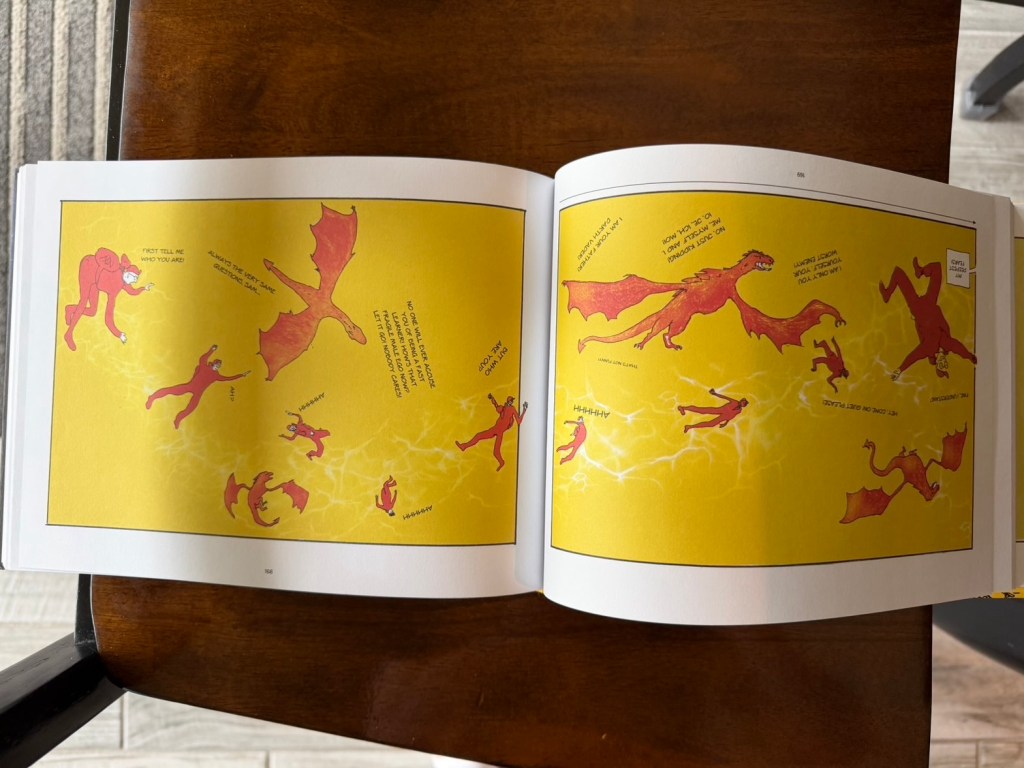
One interesting choice was about 75% of the way through the book, the character was wrestling with the proverbial dragons of the mind, which causes the entire book to flip upside down and then the reading pattern switches from left to right to right to life. It’s a clever mechanism in the print version, but I imagine it’s a nightmare on digital formats.
Overall, it was a fun and easy-to-read book. The choice to make it into a graphic novel was refreshing and made this something new to break up the monotony of traditional reading. (That sounds terrible, I love reading and don’t usually find it monotonous. But I am super burnt out on perimenopause books, so maybe it was a fun break to that streak I’ve been on of late.)
Or check it out at your local library. (Put in a request if they don’t have it. You might help introduce it to new readers.)
 Jill Will Run